CTV & OTT Inventory: How to Maximize UA Across Both
CTV (Connected TV) and OTT (Over-The-Top) advertising are two sides of a coin that can help you drive strong marketing performance if deployed correctly. CTV ads, which appear on internet-connected devices can drive significant upper-funnel awareness thanks to the premium viewing experience they deliver. OTT ads, on the other hand, drive lower-funnel performance, bringing broad reach and follow-through which is measurable and cost-efficient. Leveraging both creates a full-funnel strategy that can push your audience from discovery to purchase if properly implemented.
Connected TV (CTV) devices and Over-the-Top (OTT) services have become as ubiquitous as smartphones.
So it's clear that CTV and OTT advertising are necessary adjuncts in a programmatic ad stack. The challenge, however, is understanding their roles, and integrating them so they complement each other's performance.
In this post, we'll examine how to fit the pieces of the CTV and OTT puzzle together, so you have a complete, well-performing stack.
What is CTV?
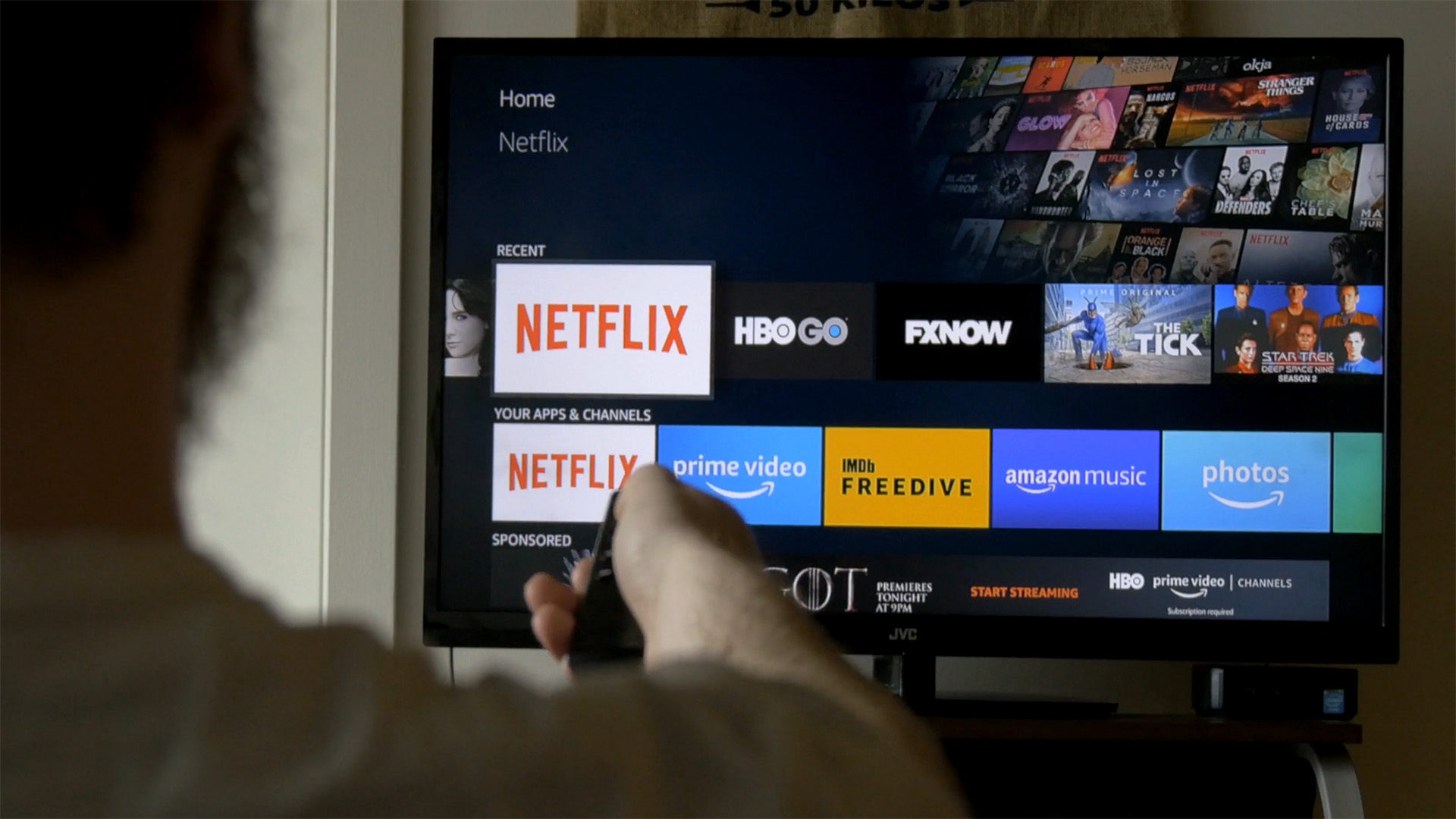
Connected TV (CTV) refers to any internet-connected device that allows users to stream video content delivered by streaming services. The following devices can serve as CTV devices:
Smart TVs — Samsung OLEDs, Sony Bravia.
Streaming sticks and set-top boxes — Roku Boxes, Amazon sticks, Apple TV.
Gaming consoles — PlayStation 5, Xbox Series X|S.
Think of these devices as the "hardware."
What is CTV Advertising?
CTV advertising refers to video ads served to viewers on the connected devices themselves, not through an app. So, for example, a viewer turning on their Samsung T.V. or PlayStation 5 might see a video ad for a sporting goods company having a clearance sale right there.
Advantages of CTV Advertising
Precision targeting—Marketers can reach specific demographics, interests, and viewing profiles to avoid wasted ad spend and impression, due to the ability to layer multiple targeting parameters.
Flexible content placement—Since advertisers don't have to buy slots like traditional TV advertising, they can reach target audiences regardless of the content being streamed.
Real-time attribution—CTV advertising lets you track ad impressions, clicks, and conversions in real time, providing performance visibility that lets you adjust campaigns while they run.
Retargeting opportunities—Marketers can also re-engage viewers who have previously interacted with their brand across CTV devices, such as re-engaging them on a phone after a prior TV exposure.
Disadvantages of CTV Advertising
Market fragmentation—Inventory is often spread between broadcaster platforms, streaming services, smart TV manufacturers, and programmatic marketplaces, each with different formats and rules, making campaign management complex.
Messy measurement—Viewers' buyer journey may occur across multiple devices, creating multiple touchpoints that make attribution and reporting difficult.
Frequency fatigue—Improperly managed frequency annoys viewers (because of seeing the same ad too often), and also wastes budget (leading to reduced campaign efficacy).
Higher cost—CTV commands a premium price versus traditional digital video, since the environment itself is more exclusive, which drives up CPMs.
What is OTT?
OTT refers to streaming media content delivered over the internet instead of through traditional cable and satellite networks. Put simply, it's the services and apps through which viewers access that content. Some of the big and recognizable players include:
Netflix
Amazon Prime Video
Disney+
Hulu
YouTube TV
Think of these as "software."
What is OTT Advertising?
OTT advertising refers to the video ads that play on OTT services like Netflix, Amazon Prime Video, and YouTube TV. They typically fall under one of four categories:
Pre-roll video ads—Ads that play before a stream starts.
Mid-roll video ads—Ads that pop up in the middle of a show or during a program's natural break points.
Post-roll video ads—Ads that play after a video stream ends.
Banners, overlays, and interactive ads—Static or clickable ads that appear alongside or on top of a video stream (including shoppable formats), instead of playing as a video ad in the stream.
Advantages of OTT Advertising
Cross-device reach—Since OTT content is delivered through internet-based apps and not confined to a physical screen, advertisers can follow a viewer across mobile, desktop, tablets, and T.V. app sessions instead of losing them when they leave the living room.
Granular content-based targeting—OTT inventory is transacted app-by-app and title-by-title via direct publisher deals or programmatic marketplaces, allowing for contextual targeting around specific genres, titles, and categories, not just household or device-level data.
Inventory breadth—The OTT landscape is vast, containing a more expansive range of ad-supported publishers (e.g., Peacock, Paramount+, Hulu) than the CTV device market. This gives advertisers larger, more diversified inventory pools to dip into.
Sequential messaging—Many OTT platforms track logged-in viewer activity across sessions and devices within their own ecosystem, enabling frequency management and story-arc creative sequencing.
Flexible ad formats—OTT isn't bound to traditional broadcast pod structures, opening room for a wider range of formats such as interactive overlays and shoppable ads.
Disadvantages of OTT Advertising
Data fragmentation—Since each OTT publisher controls its own first-party data, it rarely shares these metrics outside the walled garden in which it operates. That makes de-duplication across platforms virtually impossible without third-party resolution layers.
Inconsistent ad experience—Ad loads, pod length, and creative specs vary considerably among publishers, potentially creating an uneven viewer experience and making it challenging to run a single, unified creative test.
Complex attribution—A single household may watch a piece of branded OTT content on a phone during a commute and again on a TV app later; the cross-device watching experience can break last-touch attribution if it lacks strong identity graphs.
Capped total addressable inventories—The highest-value premium content is sitting behind ad-free subscription plans more and more, limiting how much premium OTT is truly available for purchase.
CTV vs. OTT Advertising: How Do They Differ?
One of the prevailing myths about CTV and OTT advertising is that they're the same. They're not, of course, because CTV ads are shown on internet-connected devices, while OTT ads are delivered over the internet on any device.
While they do complement each other (in ways we'll explain later), they have some key differences that influence how and when they're used.
CTV vs. OTT Advertising Comparisons
Category
Connected TV (CTV) Advertising
Over-The-Top (OTT) Advertising
Definition
Appears on the device (i.e., smart TV, streaming box, gaming console)
Appears through the internet/app (i.e. Netflix, Amazon Prime, Disney+) on any device
Screen
Television only
Television, mobile, tablet, desktop, laptop
Viewing posture
Lean-back, sound-on, living-room setting
Ranges from lean-back (CTV) to lean-forward (mobile/desktop), with or without sound-off
Ad skippability
Usually non-skippable, full-screen, resembles traditional commercial breaks
Often skippable, especially for pre-roll ads on mobile and desktop
Lower on average due to more abundant inventory on mobile/desktop
Funnel role
Upper-funnel focused, driving brand awareness
Full-funnel, with awareness concentrated on CTV and consideration/purchase phases occurring primarily on mobile and desktop
Available data signals
Household-level, IP-based
Broad mix including device ID, location, and browsing behavior from mobile and desktop
Scale relationship
Smaller, higher-value slice
Larger umbrella containing CTV within it
It's worth noting that CTV is your premium screen within the larger OTT world. So despite their differences, they're not at odds with each other, but rather, complementary pieces in a greater ad strategy.
CTV & OTT Advertising: How They Work Synergistically
Where CTV advertising falls, OTT advertising picks back up, and vice-versa.
For starters, CTV advertising fills OTT's completion-rate gap because its non-skippable, sound-on, and big-screen format ensures message delivery, something OTT struggles with due to the skippable nature of mobile and desktop formats. Also, the high-resolution, high-fidelity nature of CTV makes it a draw for audience engagement overall.
On the flipside, OTT advertising addresses CTV's granular targeting gap because mobile and desktop devices carry richer behavioral signals, not to mention opportunities for clickable, shoppable, and interactive experiences not available on CTV.
That's why a winning programmatic strategy makes use of both CTV and OTT advertising. The reality is that using both allows you to reach streaming audiences regardless of where they are in the funnel, something that's hard to achieve relying on just one. But that calls for using these two types of ads for the right objects and at the right time.
When to Use CTV Advertising
When you're launching a new product, looking to maximize brand awareness and impact, especially in front of a big screen audience.
When you're looking to re-target viewers across various devices and connect initial T.V. exposure to online actions.
If you have a longer sales cycle and can wait for delayed conversions.
If your audience falls primarily under the "cord cutting" group, the folks whose primary method of consuming video content is via streaming.
If you're willing to invest in incrementality testing or brand lift studies.
When to Use OTT Advertising
When you're looking to target a specific demographic known for its affinity for a particular platform.
When you need to use platform-specific ad formats (e.g., swipeable carousels on Netflix).
When you need to reach viewers across different contexts and devices over the course of a day.
If you need immediate conversions with clear last-click attribution.
If you're optimizing for clicks, installs, or same-session sign-ups.
Essentially, CTV advertising is your best choice when you need maximum brand awareness on the big screen, while OTT advertising is the better option for broader flexibility and reach.
That said, you achieve true campaign efficiency by bridging the gap between upper-funnel brand building and lower-funnel performance objectives. Using both CTV and OTT advertising helps you target viewers across all stages of the funnel, nudging them from awareness to purchase phases (if done right).
How to Implement CTV & OTT Advertising into a Unified Stack
Combining CTV and OTT advertising is all about building a shared infrastructure, so factors such as identity, frequency, and creative sequencing work in a coordinated fashion across both environments. That said, we can break down the whole process into seven steps.
How to Implement CTV & OTT Advertising into a Unified Stack
Launch CTV with household-level targeting
Begin with :15/:30 CTV spots targeting households by their income, geographical location, or property value. Set one clear top-of-the-funnel KPI (such as visits, brand lift) before launching so you have a benchmark for ratio adjustments (more in step 5).
Tag every CTV exposure within 24-48 hours
Deploy pixel-based targeting, identity graphs, or device IDs to capture which households or devices saw the CTV spot, and then build that list into a retargeting segment right away. Waiting longer than 24-48 hours lets exposed households cool off before follow-up ads ever reach them.
Retarget with short-form video within the same week
Push your tagged CTV audience into platforms such as YouTube Shorts, TikTok, and Instagram/Meta ads delivering the reinforced version of the original message. This matters especially for younger audiences who are more likely to make a purchase after watching an ad (notably, YouTube Shorts).
Layer in programmatic display, audio, and email/SMS
Set frequency ratios by objective, not flat numbers
Use a 1:1 CTV-to-retargeting ratio if brand awareness is your goal (one follow-up touch per CTV impression). Use a 1:1.5 if your goal is an increase in clicks and conversions (1.5 retargeting touches per CTV impression) for a harder push toward actions. Keep in mind though, that these are starting points, not hard and fast rules.
Normalize metrics into one dashboard before judging performance
Pull key metrics such as impressions, completion rates, and conversions from all platforms, including CTV, YouTube, Meta, TikTok, display, and programmatic into a unified view with standardized definitions. Skipping this step puts you at risk of optimizing numbers that are technically incomparable.
Review weekly and reallocate based on the ratio's real performance
Check frequency-to-conversion trends every week. If frequency is climbing but conversions aren't moving up with it, tighten your retargeting recency windows and rotate your creatives before spending more. Shift budget toward the channel layer that drives the greatest incremental lift, not just the highest number of impressions.
How to Measure Performance Consistently Across CTV & OTT
Of course, a CTV and OTT advertising stack is incomplete without the right measurement infrastructure. Each organization will have different goals (and therefore, different KPIs), but the process to establish sound measurement and attribution can follow the following six steps.
How to Measure Performance Consistently Across CTV & OTT
Define a shared KPI taxonomy before launch
Decide right out the gate which metrics matter most for each stage of the funnel, such as completion rates and reach for awareness (CTV), CTRs and completion rates for consideration (OTT), and conversions for retargeting. Lock this in before launch, and you'll prevent comparing metrics that shouldn't be compared.
Standardize attribution windows across all channels
Apply the same attribution window and the same conversion definition across all channels in the campaign. Mismatched windows are one of the most common causes of misattribution, where CTV seems to underperform OTT or vice versa.
Verify metrics with a third-party measurement partner
Check platform-reported numbers, including impressions, viewability, and completion rates, against an independent verification vendor. Don't accept each platform's self-reported numbers as 100% verified facts, because discrepancies between platform-reported and verified metrics are common in CTV and OTT environments.
Benchmark against category norms, not only internal history
Compare key metrics in your campaign including completion rates, CPMs, and conversion rates against established category benchmarks, not just your historical data. A number that looks healthy in isolation can still indicate subpar performance relative to what competitors and similar advertisers deliver in the same vertical.
Layer in brand lift studies for awareness-stage spend
Carry out periodic brand lift or survey-based tests alongside your performance metrics, particularly for CTV's awareness-stage spend. Click and conversion metrics by themselves overlook CTV's true effect since its focus on brand recall and consideration doesn't always translate to direct, attributable actions.
What to Consider Before Incorporating CTV & OTT Advertising
Before launching CTV and OTT advertising campaigns, first confirm whether the infrastructure to support them actually exists. That might mean a first-party data source or CDP capable of identity resolution across all devices, a DSP that can buy both CTV and OTT inventory in one hub, and a plan to stabilize metrics across all platforms immediately rather than solidifying them after launch.
Budget matters as well since most advertisers that increase CTV/OTT spend are reallocating from traditional media such as TV, print, or display, not net-new dollars. That makes it vital to know where the dollars are coming from before making commitments.
Finally, creative and measurement readiness are just as critical as technical execution. CTV requires broadcast quality, non-skippable production built for big screen, sound-on environments, while OTT's inventory needs to be shorter, and CTA-driven. For measurement purposes, agree on a KPI taxonomy and attribution window before launch, and prepare for the likelihood that CTV's brand-lift value is harder to attribute than OTT's click-based metrics.
To sum it all up, the right mix boils down to the goals of your campaign: awareness objectives make CTV the optimal choice, while performance leans more into OTT. But both can work together to cover all of your bases.
Ready to think differently about your programmatic stack by incorporating CTV and OTT? Talk to us today.
Frequently Asked Questions (FAQs)
1. What is the difference between CTV and OTT advertising?
CTV is the device, whether it be an internet-connected T.V., a streaming stick, or a game console that content displays on. OTT is the delivery method, video stream through the internet typically via an app (such as Netflix, Amazon Prime, or Disney+) instead of cable or satellite. Every CTV ad is technically an OTT ad, but not every OTT ad is CTV since OTT also runs on mobile devices and desktop.
2. Is CTV advertising more expensive than OTT advertising?
Yes, CTV typically commands premium CPMs (often in the $25-40+ range) due to limited inventory and superior viewing environment (being non-skippable, full-screen, sound-on). OTT inventory is more abundant and usually skippable, and coupled with the fact that mobile use often comes with shorter attention spans, means average CPMs are lower. That said, CTV’s completion rates are often far higher (and almost guaranteed), compared to OTT’s lower completion but broader reach.
3. Should I use CTV or OTT advertising for my campaign?
It depends on the funnel stage you’re targeting and your budget. However, the most effective strategies often level both CTV and OTT advertising, but for the right objectives and at the right times in a campaign. For bigger, brand awareness and impact campaigns, CTV comes handy because the spots work best for the big screen and almost guarantee completion, which helps generate upper funnel performance. However, OTT works well for consideration and follow-through funnel activity due to its measurability and more “shoppable” formats.
Jacob Karas
I enjoy empowering good sales people to become great sales people leveraging traditional and non-traditional methodologies.




.png)



%20(3).webp)