The ABCs of Paid Social Advertising Strategy: Revisited for 2026
You’ve probably read at least a couple (or a dozen) articles about paid social advertising trends for 2026 already, which is good.
Yes, trends matter. But so do the fundamentals.
That’s why we put this refresher guide together: to help you maximize your paid social campaign strategy on all fronts.
In this post, we’ll examine paid social principles including ad creative guidelines, ad scaling across platforms, and strategic moves to boost your campaigns.
Ad Creative Guidelines for Different Platforms
Image Source: India Today
Aligning your ad creative with platform standards is vital. Matching your ad specs with platform guidelines helps your ads perform better in terms of engagement and conversions. Ultimately, better performance reduces wasted ad spend, and increases ROAS, ROI and other metrics.
Meta (Facebook & Instagram) Creative Ad Guidelines
For Meta’s platforms, ads that immediately strike a chord and feel native to feeds perform best. That means your messaging needs to get right to the point and be mobile-friendly.
Fast transitions to show app value in the first 5 seconds
Problem → solution storytelling structure
Show app UI within first 3–5 seconds if promoting an app
Real people or product in motion
UGC-style testimonials (recommended for performance)
Punchy text snippets + dominant visuals
Sound + subtitles required
App demo + benefit overlay
Short CTAs: "Shop Now", "Learn More", "Sign Up"
Min 6 UGC videos per campaign
Ideally 3–4 static assets per campaign
Recommended: 4:5 (1080x1350) or 1:1 (1080x1080) for Feed; 9:16 (1080x1920) for Reels/Stories.
Present a striking visual + startling statement + clear product benefit (creative hooks in 3 seconds)
Fast transitions show app value in the first 5 seconds
Structure your storytelling to introduce a clear problem that culminates in a strong solution (CTA)
Feature imagery of real people or your product in motion
Feature an app demo + benefit overlay (show app UI within first 3-5 seconds) if you’re promoting an app
UGC style testimonials (recommended for performance)
Add sound & Subtitles
Use punchy text snippets and dominant visuals
Add short, snappy CTAs such as “Shop Now” or others like “Learn More” and “Sign Up”
Minimum 6 UGC videos and ideally 3-4 static assets per campaign
TikTok Creative Ad Guidelines
TikTok best rewards ads that don’t really feel like ads at all. So make them feel native as if they were made by real people (like UGC), not an ad agency.
TikTok Specs
Specs
Hook & format
Content & style
CTA & creative volume
Aspect ratios9:16 (1080×1920)min 540×9601:1 or 16:9 In-Feed
Max 20s for app performance
Strong hook within first 1–2 seconds
Surprising brand-aligned action or visual immediately
Movement or pattern-break from the first frame
Avoid over-branding in first 1–3 seconds
Show app within first 3–5 seconds
Native, unpolished UGC look — not ad-agency style
Problem + solution script
Trends, memes, and effects aligned with brand
Text overlays + captions for silent viewing
Sound + subtitles still required
Direct CTAs: "Get yours today"
Must test 6 video assets per campaign
Use vertical 9:16 (1080x1920, min 540x960); supports 1:1 or 16:9 for In-Feed for your app or product
Show your app within the first 3-5 seconds; 20 seconds max for app performance
Strong hook in the first 1-2 seconds
Include a surprising, brand-aligned action, emotion, or visual; use movement or break patterns immediately
Problem + solution script
Native, unpolished look
Native UGC and creative demos
Avoid over-branding in the first 1-3 seconds
Add text overlays and captions for users watching without audio but still add subtitles and sound
Incorporate trends, memes, and effects that naturally align with your brand
Add CTAs that provide direct actions such as “Get yours today”
Must test 6 videos assets per campaign
YouTube Ad Creative Guidelines
YouTube users waste no time clicking “skip” when video ads appear. So YouTube ads need strong branding and emotionally-resonant storytelling is essential to cut through.
Mention your app within the first five seconds to create brand recall even if they hit “Skip”.
Make a powerful statement, ask a captivating question, or introduce a striking visual in those first five seconds.
Add voice-over narration but also text overlays so your ad makes sense even if the sound is off.
Keep your ad visually strong so that each frame advances your story.
End with a strong and clear CTA that directs users to a desired action such as “Subscribe Now” or “Download”.
LinkedIn Ad Creative Guidelines
Unsurprisingly, LinkedIn favours ads that carry a professional tone and aesthetic. That means Linkedin ads need to serve business intent and outcomes, such as providing growth hacks and solving problems.
LinkedIn Specs
Specs
Hook & format
Content & style
CTA & creative volume
Aspect ratios1.91:1 (1200×627)
Single image / sponsored content
Value in the headline — immediately
Headlines max 70 characters, address pain points directly
Logos/branding early but subtle (corner or banner placement)
Professional tone, clear typography, clean layout
Serve business intent: growth hacks, problem-solving outcomes
Optional: documents or lead gen forms to boost engagement
Career/business CTAs: "Download the guide", "Attend the event"
Use 1.91:1 (1200x627 pixels) for single image/sponsored content.
Showcase your logos and branding elements early but keep them subtle (and placed in the corner or as part of the banner)
Present your value immediately (i.e., in your headline)
Write headlines 70 characters max addressing pain points.
Use a professional tone, clear typography, and clean layout.
Optional: Add documents or lead gen forms (where appropriate) as they can boost engagement
End off with a strong CTA that’s career- or business-aligned such as “Download the guide” or “Attend the event”.
Best Practices for Scaling Ad Creation Across Social Media
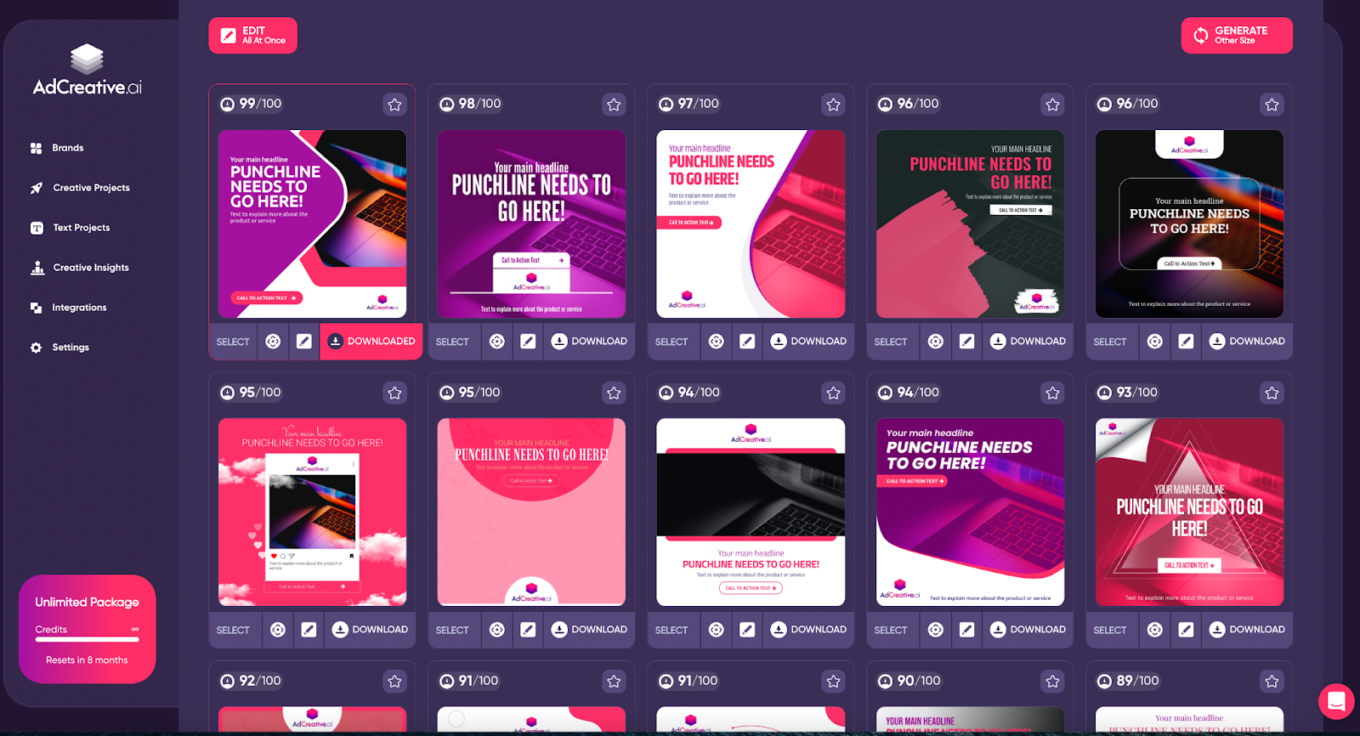
Image Source: Sortlist
Audiences rarely (if ever) make purchase decisions from a single platform alone. The buyer funnel in many verticals is fragmented, and scattered across multiple platforms. For example, a user may discover your app via a YouTube or Meta ad, before gaining interest through a TikTok placement. And since audiences inhabit multiple platforms, your ads need to meet them across channels as well. That calls for scale.
Building a Multi-Platform Strategy
Identify a singular business objective (i.e., lead gen, conversions), and map out how each platform contributes to that funnel (i.e. YouTube for awareness, TikTok for interest).
Decide how you will deploy your messaging across channels, ensuring your ads comply with platform specs and best practices.
Build and repurpose creatives for various platforms to reduce ad costs and production times.
Leverage each platform’s audience targeting (i.e., Meta’s advance segmentation, TikTok’s interest-driven discovery) and connect this data to a CRM or CDP.
Allocate Budget Across Platforms
Review historical ROAS data alongside real-time tests.
Increase budgets 20-30% weekly on winners (vertical scale); test new audiences/geos (horizontal).
Designate ~50% to TikTok (because with the right creative optimization, it could convert better than Meta and you’ll start seeing volume sooner), 40% to Meta, and 10% for testing.
Automate rules: pause high CPA, boost high CTR ads.
Track the Most Meaningful Metrics
Awareness stage: track impressions and video completions.
Also track qualitative metrics throughout the funnel such as share counts, save rates, and sentiment analyses
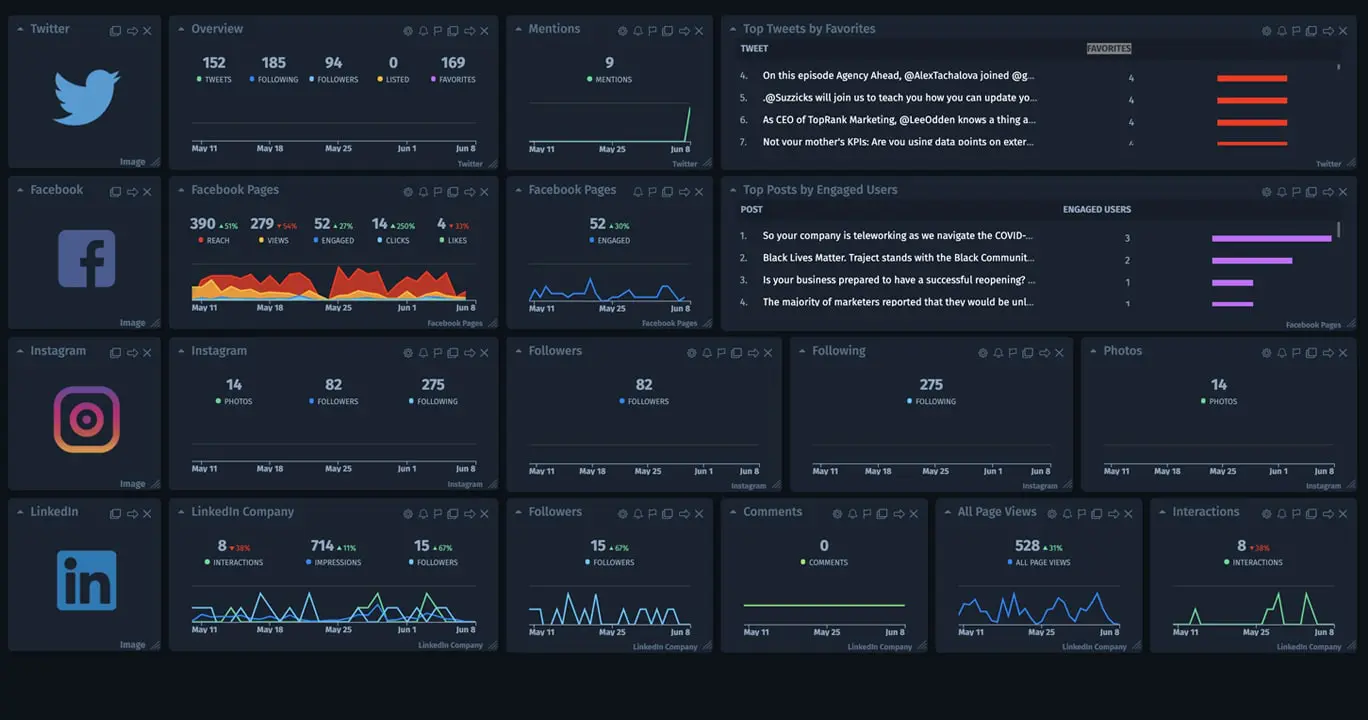
Create a unified reporting dashboard to view channel data side-by-side and prevent data misinterpretation.
Leverage Automation/AI Tools to Scale
Use platforms’ built-in automation features to adjust bids, placements, and creative delivery in real time.
Leverage creative testing tools to identify ad copy variations that best connect with audiences.
Deploy AI tools to produce multiple text, image, and video assets en masse.
Establish human-in-the-loop protocols to maintain brand safety and integrity.
Creating Effective Paid Social Advertising Campaigns
Image Source: Cyfe
Many app marketers create a few ads, set bids, and launch them, expecting them to generate revenue. That doesn’t work. Ad campaigns need nurturing and ongoing maintenance, and have to feed back to other parts of your marketing strategy.
Connect Your Paid Social Advertising Strategy to Other Content Efforts
Paid social advertising shouldn’t operate in isolation. It should function as a component in a greater marketing strategy.
For instance, you can run LinkedIn lead gen ads to offer a downloadable whitepaper.
Or you can use YouTube pre-rolls to boost the reach of your latest video.
Remember, your audience is inhabiting numerous channels, including organic ones. Paid social ads are just another part of the ecosystem, and you should use them to reinforce your organic efforts.
Refresh Your Creative Regularly
Creative fatigue, which arises when frequency rises while CPM holds, is real, and even the best campaigns can suffer from it. Attention spans are very short, and users might begin to ignore your ads if they start to look same-y and pervasive. Of course, that would mean a dip in CTRs, and rising costs as a result.
That’s why creative refreshment is essential. That means changing up your:
Visuals (and videos)
Messaging and CTAs
Formats
Keeping your ads fresh not only keeps creative fatigue at bay, but it also allows you to find more resonant variants that could boost engagement and conversion rates.
In the case of Meta, ads need weekly refreshment due to the new Andromeda algorithm, which favours testing of multiple ad formats, angles and hooks.
Ideally, you should rotate your creatives every 1-4 weeks (1-2 weeks for large budgets over $100k+/mo). Fortunately, generative AI tools are a gem for creative refreshment. You can rehash and recontextualize ad creatives in minutes with the right AI prompting workflows and model selection. But of course, ensure AI-generated creatives undergo human review.
Test, Iterate, Adjust
Outside of creative refreshment, there’s overall campaign optimization. Testing and adjustments are essential to every paid social advertising strategy. The more experiments you conduct, the more flaws and opportunities for improvement you can spot.
You can test and optimize just about any aspect of your campaign, such as:
Adjusting bids and budgets based on ad performance
Testing different events to optimize to (i.e., optimizing to registrations for faster campaign scaling, despite purchases being your primary goal
Retargeting audiences based on insights you uncover about them.
Conducting these tests will reveal what’s working versus what’s not, informing you on what to keep doing and what should change.
Fundamentals Are the Backbone of Paid Social Success
Optimizing your paid social advertising strategy around the basics is the starting point for success in 2026 (and beyond). Why? Because the basics have changed, now that the mobile ad landscape has been moulded by omni-channel buyer journeys, automation tools, and data fragmentation. Following trends won’t do much if you’re not abiding by the playbook.
Working with a paid social agency can help you maximize your campaign effectiveness. They can help you choose the best platforms for your intended outcomes and audience, while ensuring all facets of your campaign are optimized.
Looking to improve your paid social campaign strategy? Get in touch with us to learn how we can help you optimize your ads for maximum performance.
Frequently Asked Questions
What is an example of a paid social strategy?
Paid social could involve running full-funnel campaigns, creating ads to reach new audiences or deploying retargeting ads to re-engage viewers that abandoned carts or disengaged with your campaign. Most involve creative testing, budget optimization and targeting adjustments to improve ad performance.
How to plan a paid social advertising campaign?
Start with clear business objectives and map out how your ads will reach buyers at different stages of the funnel and on different platforms. Set a budget and deploy creatives that match ad spec requirements of the channels you want to reach. Test your ad performance, refresh your creatives, and make adjustments where necessary.
Which social media ads are most effective?
No ad platform is inherently better than the other as they all have ideal use cases. However, Meta platforms often have the widest appeal, as Facebook is very comprehensive while Instagram is a standout for visuals. However, TikTok is growing rapidly for its appeal to younger users, while LinkedIn is highly effective for B2B ads and its utility to professionals.
Jacob Karas
I enjoy empowering good sales people to become great sales people leveraging traditional and non-traditional methodologies.



.png)
%20(3).webp)