A few years ago, the rule for businesses was this: appear on Google or you don’t exist.
Soon, the new rule will be: “Appear in chatbot search or else you will become invisible”. Now that much search traffic comes from ChatGPT, Claude, Perplexity, and other AI chatbots, your content and brand need to be optimized for LLMs and answer engine optimization (AEO). But traditional content isn’t the answer.
On the other hand, PPC comparison sites are a powerful content format for building LLM citations. This guide will examine why PPC comparison sites are so effective for AEO and how they work with traditional search.
If you've been asking how to rank in ChatGPT search (among other LLMs), these strategies will help you earn those citations.
Competitor comparison PPC entails the creation of landing pages that directly compare their product against competitors, and then promote those pages using paid search campaigns targeting competitor keywords.
For apps, that could look like:
A competitor PPC page would build in-depth pages around these keywords, and highlight how their app compares to competitors.
If you need helpful competitor comparison landing pages examples, take a look at Pick Your Bank, a comparison engine designed for online banking products (pictured below).
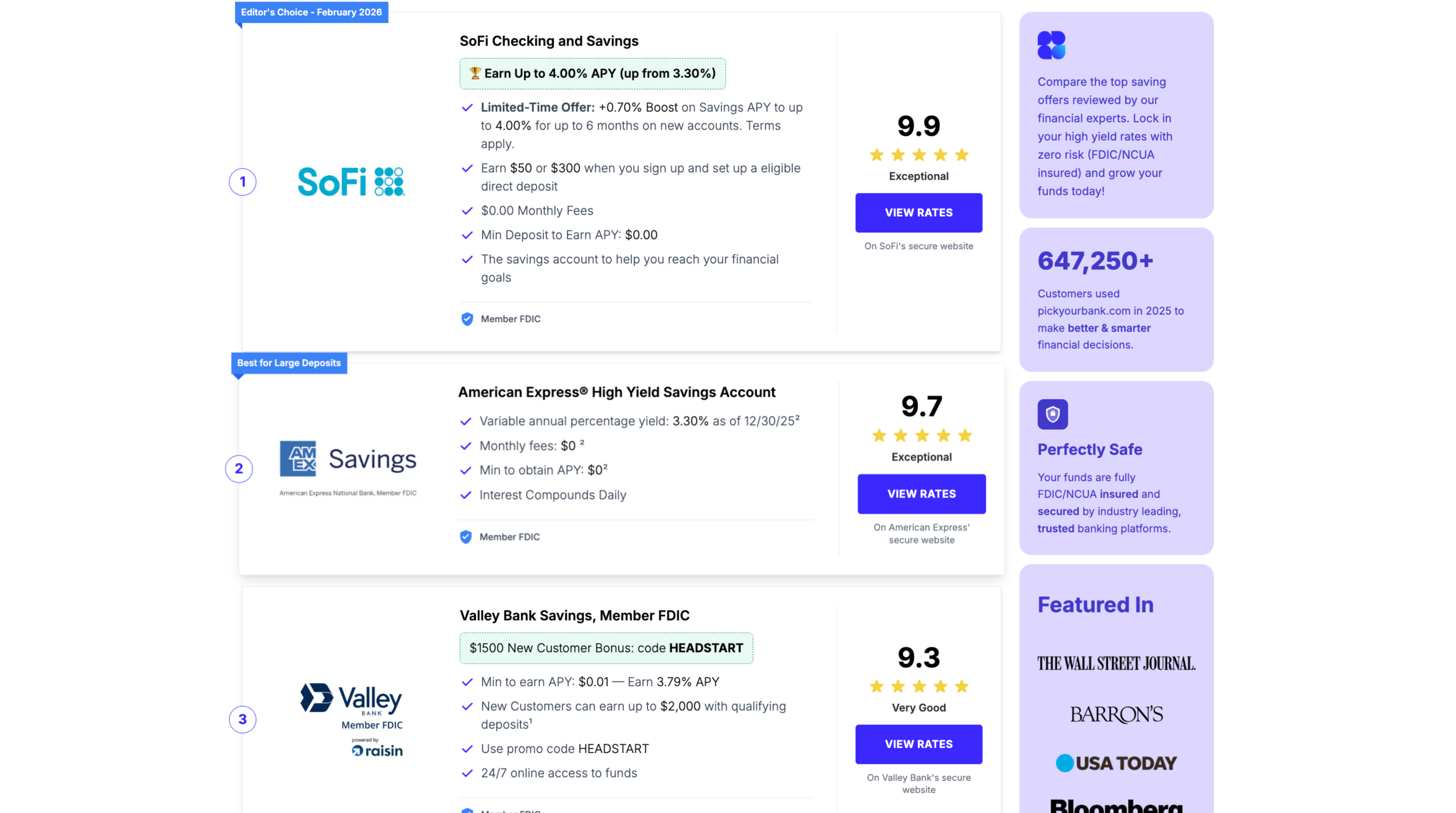
This page compares Pick Your Bank’s best high yield savings accounts for 2026. Each description contains clear product specifications such as annual percentage yields (APY), unique offers, and average customer ratings for social proof.
They’re also presented in a panel format (that still assumes a table format) that’s easy on human eyes and digestible for LLMs. Ultimately, this page establishes Pick Your Bank as an authoritative source of fintech product info, both for users and for AI chatbots to site.
It’s not a fluffy blog post or intricate, multi-page guide. It gets right to the point, and that’s exactly what makes it a powerhouse format for LLMs, for reasons we’ll explain in the next section.

PPC-driven comparison strategy continues where traditional SEO approaches end. They bridge the gap between short-term ROAS goals from paid clicks and earning long-term visibility through AI citation.
LLMs prioritize information gain. That includes content that creates a clear delineation between two entities (in this case, brands) rather than standard definitions.
Building a comparison site creates a structured decision matrix. LLMs have been trained to identify patterns like pros and cons, which helps users make informed choices. Using PPC to drive volume to these pages creates a signal to search engines that your specific page is a highly useful source of information.
The result? A greater likelihood that AI will group your feature set as the best answer for a user seeking recommendations.
AI systems mainly rely on entity recognition and knowledge graphs to decide which brands belong in a specific category.
If your brand rarely gets mentioned alongside competitors, AI models may not see you as a legitimate alternative.
Comparison pages address this by regularly placing your brand within the same context as category leaders.
With repeated exposure, your brand will start appearing in the same entity cluster, increasing the likelihood that LLMs will cite your app or product as a recommendation during comparisons.
PPC traffic generates valuable behavioral insights.
When users engage with comparison tables, click feature explanations, or interact with widgets, these actions signal that the page satisfies decision-stage intent.
Search engines and AI systems increasingly factor engagement signals when choosing which sources to trust (and cite).
The result is a high-performing comparison page that’s more likely to get referenced in AI-summarized answers.
The strongest organic signal for an LLM is direct brand searches. With a comparison site ads, users can see your brand compared to a competitor. Instead of clicking the ad, they might ask ChatGPT or Perplexity: “What are the advantages of {your brand} over {a competitor}”. These search queries create a feedback loop where LLM sees a rise of interest in your name and give additional weight to your brand.
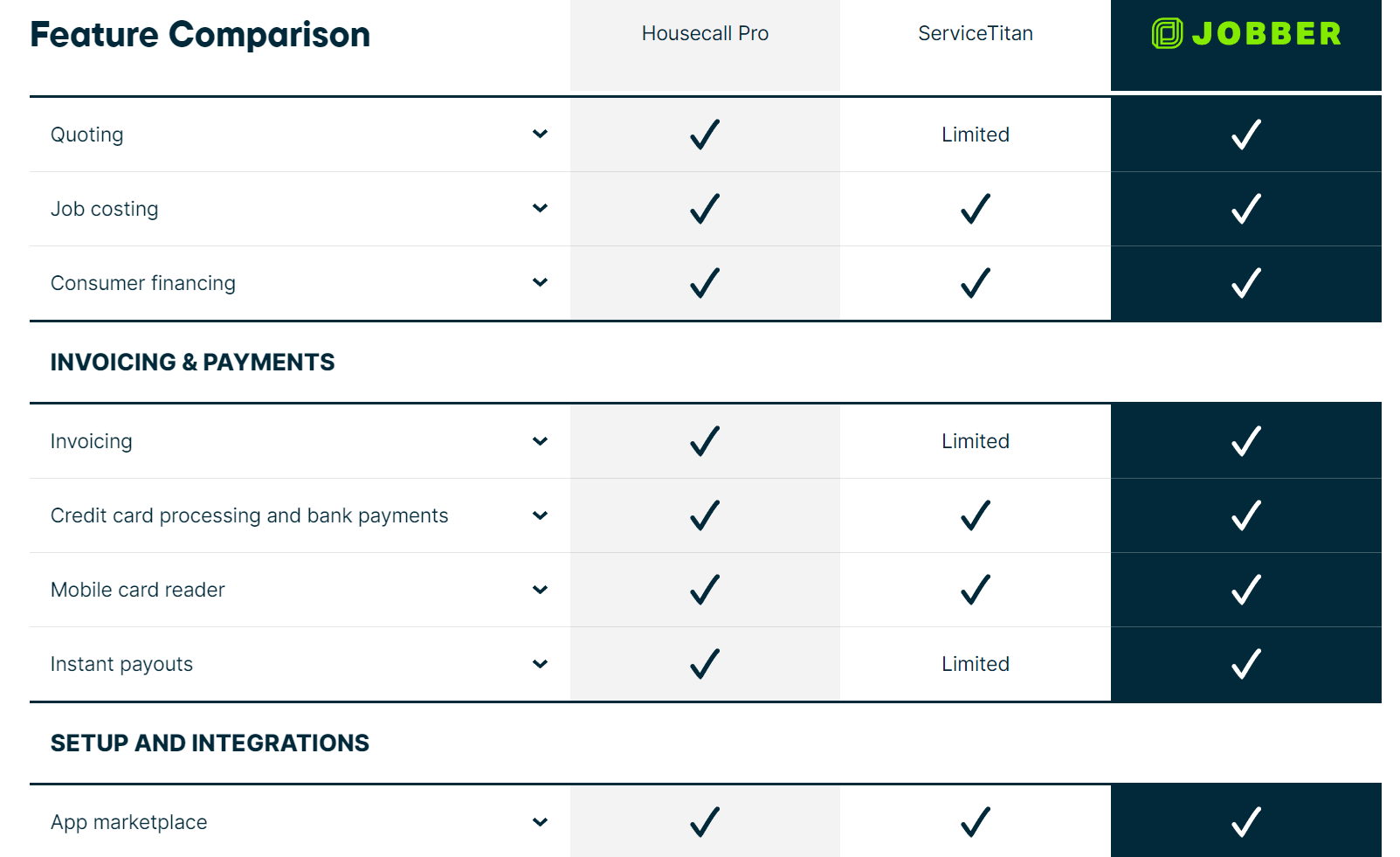
Vague copy has little carry-over and value to AEO; comparison sites directly provide the highly structured pages LLMs love to cite. Comparison pages naturally include tables, bulleted lists, and technical specs, formats that LLMs can easily interpret.
That structure enables you to use advanced Schema Markup (i.e., Product or Review schema) to serve as an API for AI crawlers. Labelling your integration lists and pricing tiers on a high-performing comparison page makes it more readable to AI so it doesn’t have to guess or worse, hallucinate your features.
As we mentioned above, LLMs will hallucinate answers if relevant data is scarce. So if you fail to clearly identify your brand’s strengths, an LLM will pull information from wherever it can (i.e., Reddit, a random blog post) to give users an answer.
A PPC comparison page counteracts this by providing search engines with comparisons that highlight your USPs. If your comparison pages become the most prominent sources of your brand narrative, they’ll synthesize answers that represent your brand’s truth, not hallucinated facts.
AI models weigh third-party sources more than just your website’s claim for added validity. Comparison pages support this function since they’re often sourced by researchers, influencers, and even competitors as a reference for their own content.
This essentially creates a platform of secondary citations, meaning organic backlinks from other domains. The results are external validation signals, which provide LLMs with more impetus to reference your brand for product recommendations.
Of course, it’s crucial to structure your comparison pages properly so they’re indexable by LLMs. Applying the proper structure ensures that your brand is visible and retrievable.
We won’t spend too much time on this section, but here’s a quick primer on the importance of SEO for PPC comparison pages.
Despite LLM search being “the shiny new toy”, traditional SEO strategies still matter as they validate this PPC-driven approach. In effect, it's not a matter of LLMs vs SEO...it should be seen as LLM SEO.
These are SEO tenets you can’t overlook. They provide the raw structure for which you can build LLM optimization strategies upon.
Creating effective comparison pages requires attention to detail and expertise in three areas:
Studying competitor comparison landing pages examples will give you a better understanding of how to build them, but working with an agency that understands how these layers interact will give you an advantage. The ones who do can design pages that generate fast PPC conversions while also boosting AI visibility and citations for the long run.
An agency that provides these offerings will ensure that your comparison pages yield the results they have the potential to bring.
Looking to build PPC comparison pages that bring in LLM citations and brand visibility? Get in touch with us to learn how our paid search services can bring traffic to these pages.
PPC and SEO are not necessarily harder than each other. That said, PPC is easier to measure and results are more quantifiable. SEO efforts, on the other hand, can be more complex and their results can be more abstract although they too are measurable and quantifiable.
Drawing a conclusion as to whether PPC or SEO is better depends on your marketing objectives. If you want to drive traffic to your site in the short run, then PPC ads are ideal. However, if you want sustainable, long-term online visibility and presence, then SEO is a must. Ideally, you should invest in both strategies since they complement each other, especially now for AEO and LLM citations.
PPC ads in 2026 (and likely beyond) will focus on more precise strategies and targeting, rather than larger budgets. The advent of AI, privacy shifts, and changes in user expectations are the driving forces behind why strategy takes precedence over ad spend.

.png)

%20(3).webp)