Now that App Growth Summit Mexico 2025 has wrapped up, we want to take a moment to reflect on the event. It was another exciting installment for the App Growth Summit event series, much of its content focused on the LATAM app market.
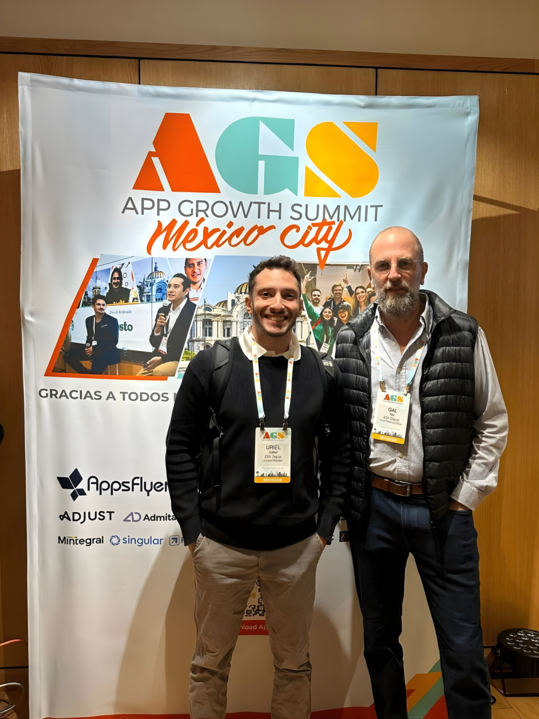
We had the privilege of being a sponsor, as well as having our very own Gal Raz and Uriel Galker in attendance to represent Z2A Digital. They left the summit with a plate full of industry insights, new connections, and some of the tastiest burritos they could get their hands on.
With that being said, we’ll highlight the summit’s key segments, and how they correlate to emerging trends in the LATAM ecommerce and fintech app market.
The event covered a wide range of topics. They included hooked models to make app use habitual, branding versus performance marketing, and general growth tactics for 2026. However, some segments dove further into more technical topics that will have broad implications for app companies going forward.
Led by Arturo Soffer from KFC and Mateus Braga from Genius Growth, this segment discussed how app brands could improve performance at both the top and bottom of the funnel.
Typically, the strategies used to generate awareness and drive conversions are siloed as separate activities. However, this segment introduced approaches that could help app companies optimize growth at both ends of the funnel simultaneously.
The summit dedicated a portion of its agenda to AI, and its proliferation in the app industry. Roy Carrasco of Stori and Erick Aguila of Warner Bros. Discovery led this segment, detailing how AI is supercharging growth teams. It’s enabling them to optimize efficiency and generate profitable growth at speeds that were once inconceivable. They also explained the practical uses of AI when it comes to matters of LTV optimization and ROI-driven campaigns.
Precise attribution has always posed a challenge for app brands, and that’s why the summit spent some time covering measurement strategies. Led by Alejandro Noriega from AppsFlyer (LATAM division) and Carlos Torres of Airalo, a dedicated attribution segment explored best practices and local benchmarks for app brands to consider. It also covered the role of Marketing Cloud Platforms (MCPs) in supporting app promotion and campaign optimization.
One of the larger discussions was centered around the App Store’s Custom Product Pages (CPPs) and Google Play Store’s Custom Store Listings (CSLs). These are not new to app marketers, but they’re often underutilized.
Rachael Minster of Uber, delved into the arena of ASO, along with strategies to use CPPs, CSLs, and Apple Search Ads. The purpose of her discourse was to help mobile app companies and marketers learn how these tools could improve user acquisition, creatives, and conversions.
With these topics in mind, it’s worth covering the adjacent trends, specifically in the LATAM market. Two areas of focus come to mind: fintech and ecommerce, verticals that have gained a strong foothold in the LATAM app space. To get even more specific, two countries in particular—Mexico and Brazil—are showcasing what patterns are hot in Latin America at the moment.
Ecommerce apps are becoming juggernauts all across the LATAM space, but they’re especially dominant in Mexico and Brazil. For example, Brazil ecommerce volume reached $346 billion USD in 2024, and is projected to hit $586 billion USD by 2027, a 19% CAGR. Mexico’s ecommerce volume reached $97 billion USD in 2024, and cross-border ecommerce from the country was forecasted to grow by 41% in 2025.

These numbers suggest that funnels are becoming increasingly cross-border and payment-driven. That means app growth and attribution across the funnel should account for both local rails (i.e. Pix, SPEI/CoDi), FX, and cross-border trust signals.
In both Brazil and Mexico, Fintech and ecommerce apps are moving from simple channel ROAS to corridor- and method-level attribution. They’re tying campaigns to the completion of transactions and repayment metrics.
In Brazil, for example, Pix processed 57 billion transactions in 2024, carrying a value of roughly $3.8 trillion USD. Merchants who offer Pix typically see around 18% higher checkout completions than those who don’t.
Also high signal density, notably from the Brazilian (Pix) and Mexico fintech space (SPEI/CoDi) gives more early-funnel events for optimization and incrementality.
Both Brazil and Mexico fintech and ecommerce apps are blossoming markets that present high-stakes for app visibility and conversion. That said, the ASO and paid ad playbook makes it imperative to optimize CPPs, CPLs and ads for hyperlocalization.
That means going beyond basic language phrasing, and including details on regional payment methods, adding trust cues, and highlighting appropriate use cases.
It also means that app brands and marketers must ensure that ASO strategies work in tandem with in-app UX and paid UA. Relying solely on paid traffic without organic performance is now unsustainable, especially in verticals with high CPLs such as those seen in Brazil and Mexico fintech spaces.
Like most global markets, AI-integration is becoming a mainstay in both Brazil and Mexico fintech and ecommerce apps. Up to 77% of Brazil ecommerce retailers expected growth in 2025 with many investing in AI to analyze user behaviour, personalize recommendations, and automate customer support.
In Mexico, AI is being used to push personalized ecommerce experiences ranging from product recommendations to localized content, both of which increase conversion and repeat purchase rates.
Operationally, growth teams are using AI/ML to uncover transaction and behavioural data (i.e., Pix usage, cart patterns, repayment metrics). This helps them segment users by risk and value, and then deliver personalized incentives and bid strategies by cohort.
A subset of Mexico and Brazil ecommerce apps that are very sticky right now are food delivery apps. They’re growing in volume, revenue and usage, as more LATAM users want convenience and options when it comes to meal prep.
Brazil is currently the largest LATAM market for food delivery apps, with a market size of $5.33 billion USD in 2024, and a projected value of $22.5 billion USD by 2030. There are roughly 55 million delivery app users in the country, with iFood being one of the most relied upon services.
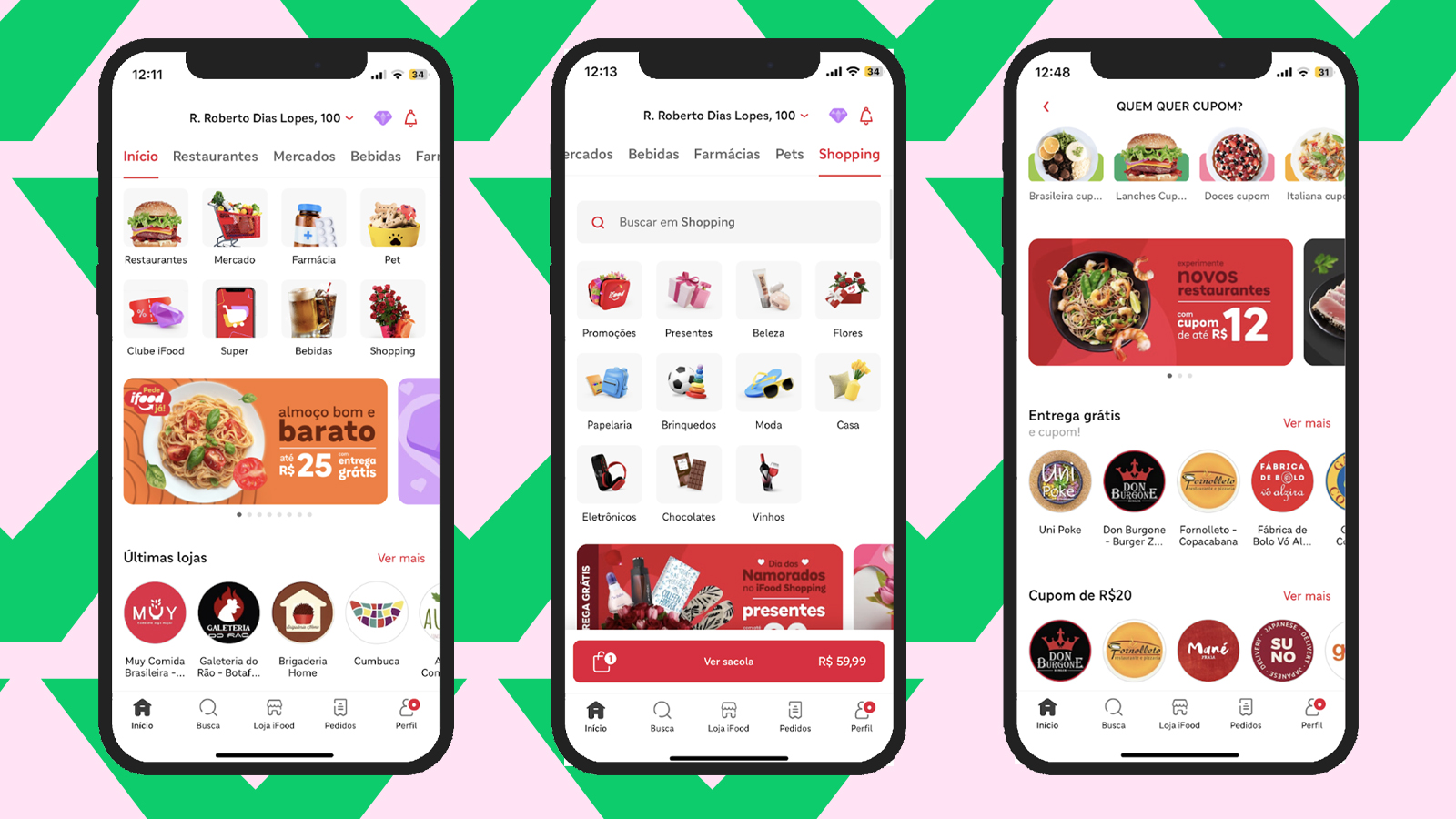
Mexico is the second-largest, with 38.2% of users relying on Uber Eats. This is followed by DiDi Food at 29.1%, and Rappi at 21.3%, demonstrating the competitive landscape of food deliveries in the region.
The increased adoption of food delivery services in LATAM has been driven by post-pandemic changes such as WFH and hybrid work.
A more concerning trend in the LATAM ecommerce and fintech app market is a two-fold problem: traffic quality and fraud.
Regarding ad traffic quality, there’s a high level of invalid traffic (IVT) and viewability issues, with some data suggesting that the region has higher IVT than global averages. That means a significant share of paid traffic may come from bots, incentivized clicks, or low-intent users who are inflating CPIs, CPLs, and reported ROAS.
The risk here is that as budgets shift more into mobile and retail media, the supply chain’s complexity will likely increase the risk of misattribution, click-spamming, and fake installs. Growth teams will have to ensure that they’re making sufficient use of fraud filters, post-install KPIs, and incrementality tests.
There’s also ad fraud, specifically in Brazil and Mexico fintech apps, as well as ecommerce ones. Although the entire LATAM market is a top target for cybercrimes such as phishing and payment fraud, Mexico and Brazil, being the largest markets, unironically, have the highest incident rates.
These crimes are being driven by factors such as:
These “growing pains” will make it essential for LATAM app makers to focus on shared metrics. It will also make tight feedback loops imperative so that bidding strategies are optimized on actual value, not misinterpreted signals.
The LATAM app market is one of the fastest growing and most exciting markets in the world right now. With more Latin American customers seeking the convenience of ecommerce and fintech payment apps, there’s a growing opportunity for app developers to capitalize on these opportunities.
That said, it’s crucial for advertisers and publishers to be aware of the risks in the market, and to plan around them. Whether it’s poor traffic quality or fraud, proper data attribution, budget optimization, and incrementality will be crucial for success in this market.
At Z2A Digital, we help brands across all markets including LATAM achieve and sustain profitable growth, while offsetting risks and costs associated with fraud and traffic quality.
If you’re looking to scale an ecommerce or fintech app, book a demo with us today so you can learn how our platform can help.

.png)



%20(3).webp)