The game looks simple enough. Shoot enemies for points, dodge barrels to advance, collect upgrades for weapons.
Or so the ad shows.
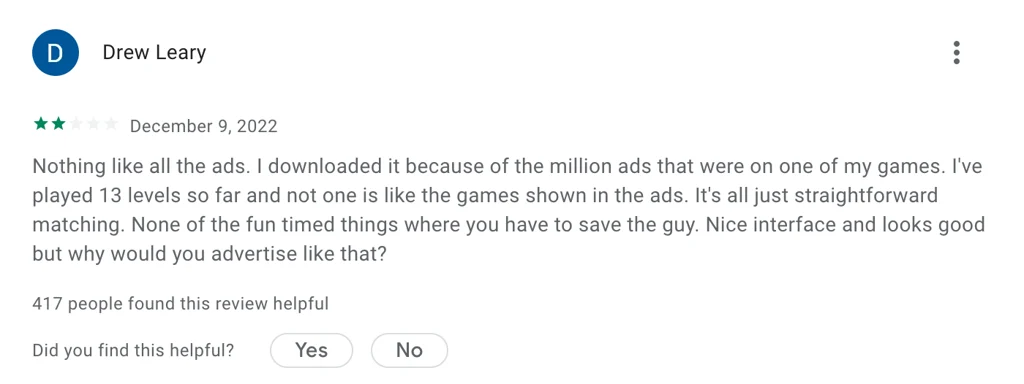
Its crisp visuals and sharp sound are compelling enough to warrant a click. You hit download and then load the game. And now? You’re immersed in a laid-back match-3 game assorting bananas and apples for points.
This bait-and-switch experience is so familiar that users don’t even flinch at fake mobile gaming ads anymore. Mobile game publishers use these ads as a genuine user acquisition strategy, often to the disdain of users.
And yet, it remains a core UA strategy, one that’s probably going to stick. Even if it shouldn’t.
Fake gaming ads have become so pervasive, they’ve spawned subcategories now. Some of them are outright lies, with no zero connection to the games they’re advertising. Others are sly misrepresentations of the games, showcasing the hints of real gameplay but exaggerating their mechanics to boost the game’s appeal. And some even steal elements from other popular titles.
Given how common fake gaming ads are now, more forms will take hold. Which means that cunning publishers will have more methods to mislead players.
The reality is this: fake gaming ads can work. Some sources say fake creatives can outperform authentic gameplay-based ads by 4—5x. That across all genres including puzzle, RGPs, shooters, simulation games and more. And according to Matej Lancaric, a user acquisition consultant with expertise in the mobile game space, fake ads can lead to 10x higher install rates than regular ads.
There are real-world examples of this success too.
Take, for example, Kingshot, a medieval survival game that crushed it in 2025. The publishers behind the game ran fake creatives featuring reskinned footage of genre-adjacent titles such as Age of Empires and Kingdom Rush. None of these clips showed actual Kingshot gameplay. And yet still, the game earned 10M downloads in three months, and raked in $35M in revenue during that same period.
This is possible because this model has a formula that draws numbers, given the right circumstances.
Studios using fake game ads rationalize that low CPI and massive download revenue can make the game profitable, even if it has abysmal retention rates. After all, if you’re paying very little per install, your game can still produce positive ROAS.
Here’s the reality behind fake game ads though; it’s a dice-roll of a strategy. Studios are making the gamble that low CPIs and download volume will be sufficient enough to fund the game, even as players abandon and uninstall it en masse. But that’s not a guarantee. And then there’s the more immediate risk of a seriously damaged reputation.
Matej Lancaric, who we mentioned a bit earlier, ran an experiment of sorts on the effects fake game ads had on whales (players who make significant in-game purchases). He spent $5,000 conducting two surveys to gain insights on users’ perception of these ads, inquiring about their gaming frequency, app store spending habits and more. He discovered the following:
Yes, a decent amount of users stayed. But remember, not every game will be a Kingshot. Let’s say you have a hypercasual game (a common offender when it comes to fake ads), yielding 100,000 installs from fake ads at a CPI of $1.00. That’s an acquisition spend of $100,000. If we plug in those percentages from Lancaric’s survey to this hypothetical game campaign, you get:
The remaining 17,000 would need to be worth at least $5.88 to break even. That’s before considering refund processing costs and increased CPI on future campaigns due to an influx of negative reviews. And for the hypercasual market, the ARPU is only $0.86, 7x less than what would be needed to generate profitable returns under these circumstances.
Unsurprisingly, uninstalls and refund requests also show face in terms of retention rates. Low LTVs and retention rates aren’t automatically a wrecking ball for games using fake ads, but they’re usually present and problematic.
Take, for example, Last War. The multiplayer strategy game is no doubt a massive hit. It started with just $287,000 in revenue during its launch in August 2023, but underwent an explosive growth trajectory throughout 2024, giving it 4x status. Monthly revenue increased from $30 million in January 2024 to $138 million by December 2024, a growth rate of 360%. By February 2025, it had achieved $2 billion in lifetime revenue. And it dominated in the U.S., South Korea, and Japan.
The game’s rollout also featured a campaign full of fake ads. In Q4 2024, Last War collaborated with Antony Starr, who plays the charming, psychopath supervillain, Homelander, in the T.V series, The Boys. They doled out a series of ads where Starr invites viewers to try the “real left-right challenge” (in his American Homelander accent, not his natural Kiwi accent).
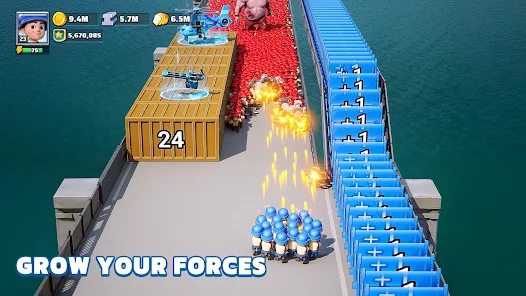

As he plays, the ads show action-heavy sequences where you guide troops through gates, dodge obstacles, and shoot barriers. But the actual game itself involves base building and gathering resources. The ads depicted a few mini-games that are technically playable, but only for a few seconds to unlock stamina bonuses.
The ads became viral hits on Snapchat and TikTok and attracted media attention. And they also made players upset. You can find plenty of Reddit threads and other community posts where users clearly weren’t too thrilled about the ads.
The game’s retention rates reflected the broader consensus of players’ reception. It’s D1, D7, and D30 rates stood at 34%, 11%, and 4% respectively, below-average numbers for a 4x title. Other factors such as an aggressive pay-to-win structure likely contributed to the game’s low retention rates, but its reputation for fake ads probably didn’t help either.
The lesson? Unless you’ve got backing from a massive tech company (as Last War did with Tencent) and a huge UA budget to constantly replace churned users, don’t roll the dice on fake ads.
In fact, if ethics matter, then stay away from fake ads.
Fake ads work because they leverage basic psychology principles that hook attention. They often get straight to the point by visualizing what the game looks and feels like (even if it’s misleading). Exaggerated storylines and neglected characters build empathy and falsified challenges satisfy curiosity gaps. They also make progress look compressed. And they strip away the cluttered UI that makes many games feel overwhelming.
But mobile game publishers can literally steal this underlying logic, and invert its use for legitimate, ethical ads that are true to the game themselves.
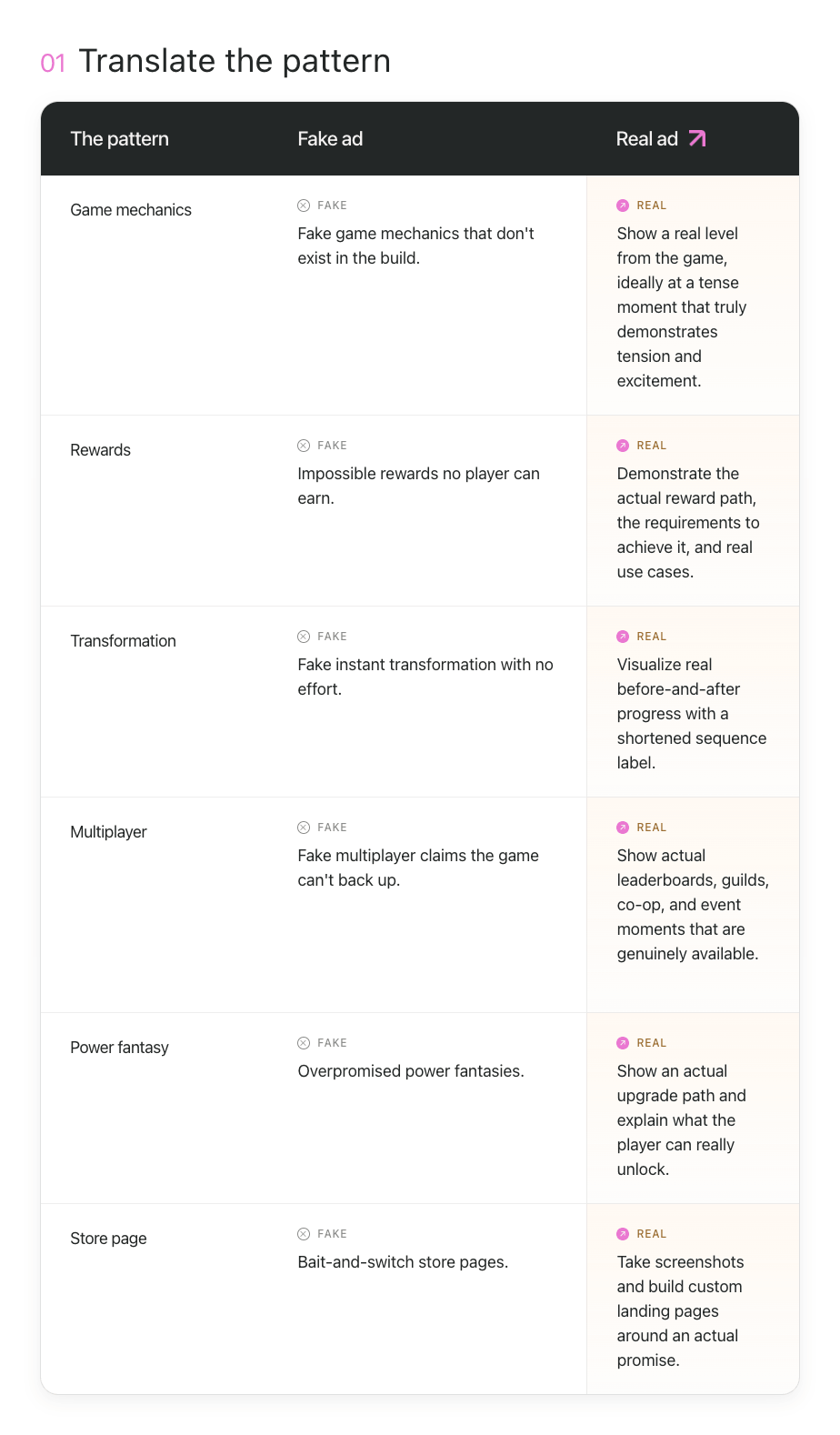
You can even use fake ads from competitors as research to inform your legitimate gaming ad strategy. Essentially, what you do is analyze fake ads for games with high download counts or conversely, game ads that grab your attention. You then go through the following framework:
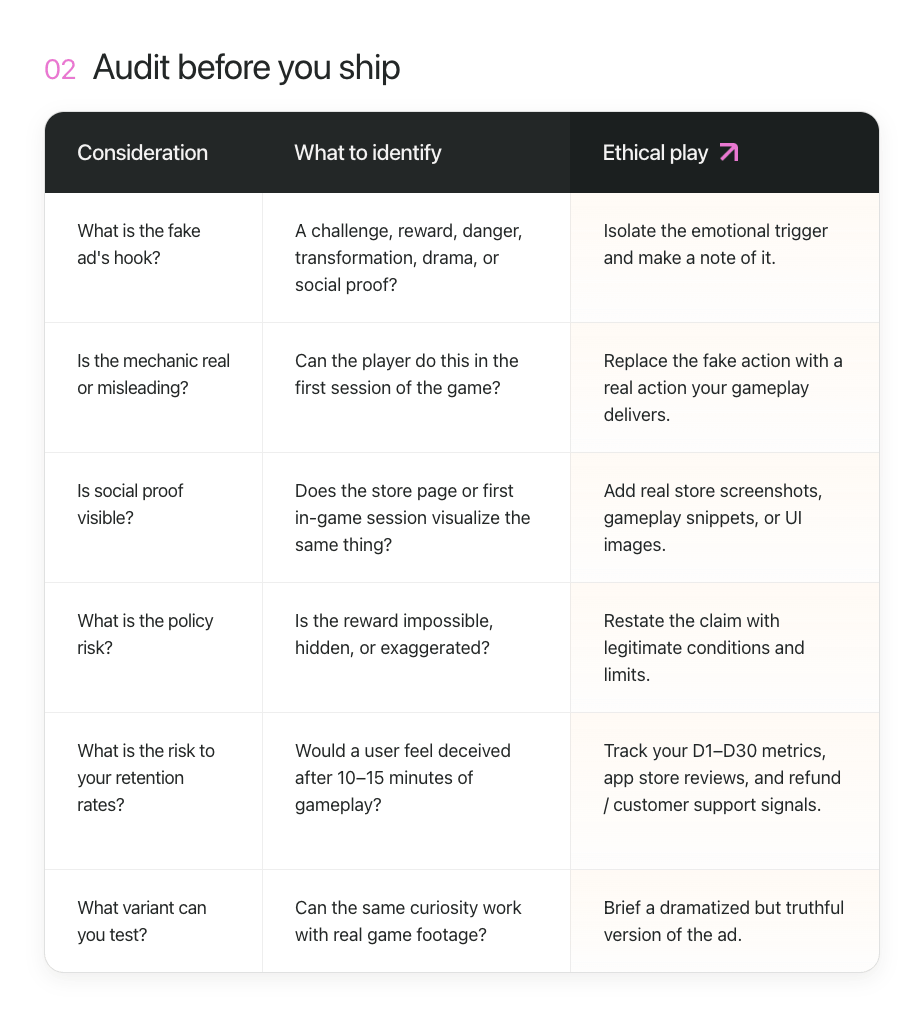
The psychology behind fake mobile game ads and reals can be the same; the only difference between them is honesty of what they portray.
Something else to keep in mind, is having strong guardrails in place for AI-generated creatives. Many fake game ads are actually AI hallucinations, meaning some of your variants may inadvertently mislead potential users. It’s crucial that you strengthen your inputs, using rigid templates, strong briefs, visual imagery, and more so that AI tools execute variants that truthfully depict your game. Nothing more, nothing less.
Working with a user acquisition agency who has a strong handle on agentic and AI workflows helps in this regard, as they can help you build and test authentic creatives that drive results.
In April 2026, a New York federal jury delivered a verdict against Papaya Gaming Ltd., awarding $420 million in damages to competitor Skillz Platform Inc, over a case of false advertising (and unfair competition).
Skillz alleged that Papaya misrepresented its popular games including Solitaire Cash and Bubble Cash as fair, skill-based competitions, when they were, in fact, using bots to manipulate gameplay so that players would lose after winning too much. As of May 2026, Skillz filed motions asking the U.S. District Judge to increase the damages up to $1.4 billion.
The moral of the story?
More of these cases may emerge in the future, especially now with AI and AI agents generating creatives that may completely misrepresent gameplay.
Until then, using fake ads, although sometimes immediately profitable, are a quick and easy route to eroding user trust and high churn. And remember, that matters if you don’t have the budget to counteract rage uninstalls and refunds.
Keep your ads honest. The users you acquire will reward you with loyalty, and will more than likely drive sustainable revenue down the road. Not just a temporary cycle of burn and earn profits.
And more importantly, your reputation will stay in players’ good graces.
Want to improve user acquisition for your mobile game without resorting to fake ads? Get in touch with us to learn how we can craft a legitimate, ethical ad strategy that drives real results.
Games such as Hero Rescue, Hero Castle Wars: Tower Attack, Arrow a Row, and Ball x Pit are among the titles that appear to have good reputations. These games have been cited by forum members as actually resembling the ads that promote them.
Mobile game publishers use fake ads to maximize download revenue, and trap users into addictive monetization loops. It’s a deliberate strategy that takes advantage of human psychology, hooking users with fake gaming elements that create excitement but often fail to translate into actual game play. It’s a bait-and-switch tactic that is unanimously seen as unethical, although they operate in a legal grey area.
One of the biggest reason why modern mobile game ads fail is due to tactics such as:
These tactics create mismatches between the perceived and actual gameplay experience that frustrates users.

.png)



%20(3).webp)