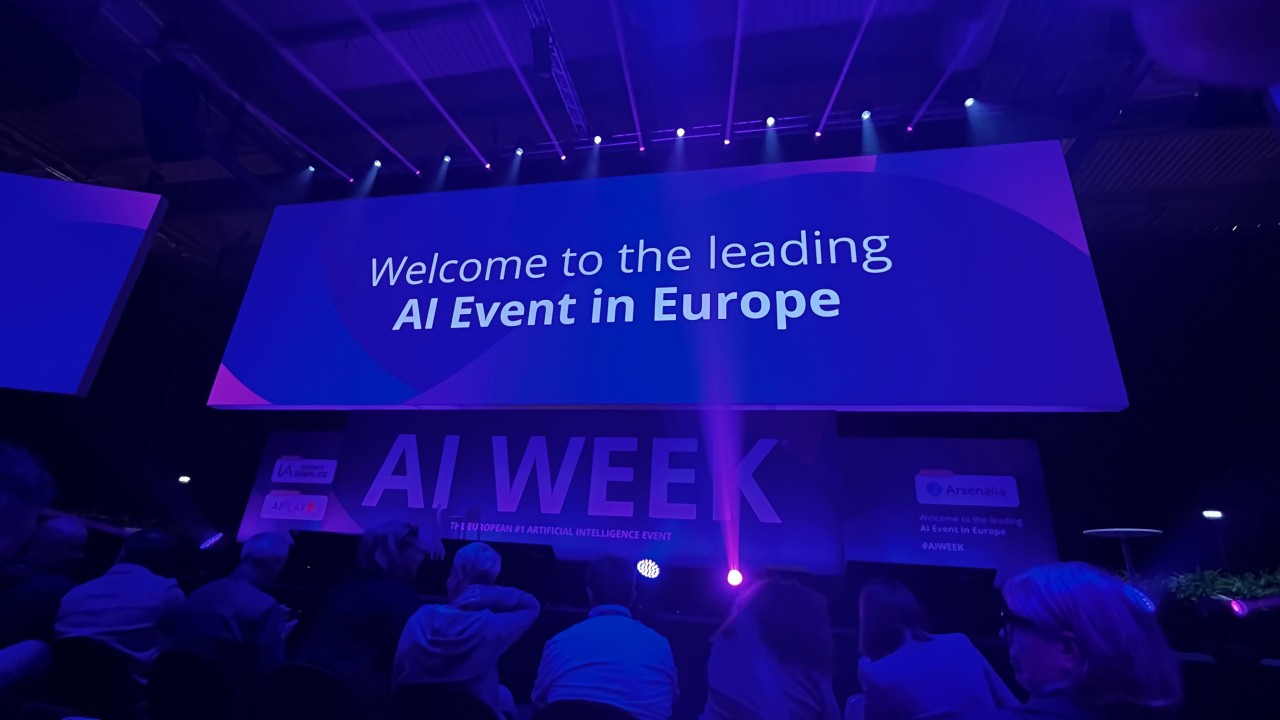
From May 19th—20th, 2026, AI Week, Europe’s largest annual B2B artificial intelligence event took place at Fiera Milano Rho in Milan, Italy. The two-day conference featured over 700 speakers from around the globe, 17 stages, and interactive summits tailored for entrepreneurs, startups, marketers, and more.
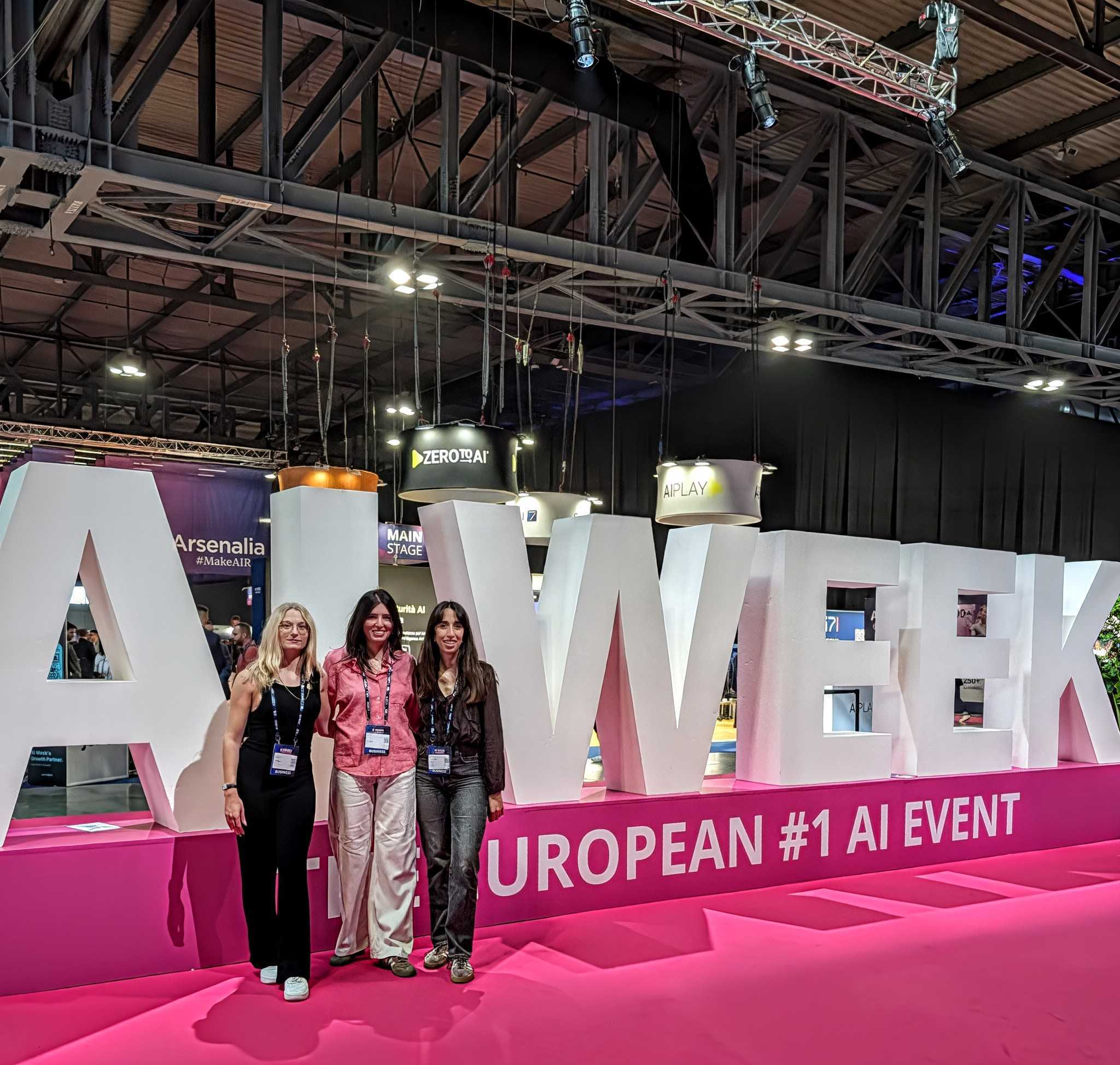
Z2A Digital had the privilege of attending the conference. The powerhouse trio of Lavinia Celaia (VP, Growth), Justine Lortal (Head of Marketing), and Alessia Monteleone (Marketing Operations Assistant) was there to represent us. They attended several high-profile events, taking in a large cache of notes on how organizations can build an AI company culture that truly works.
In this blog post, we’ll uncover some of these insights.
A few themes re-emerged throughout the two-day conference. They revolved mainly around ai culture transformation and how the tech is being woven into company workflows and marketing activities.
One of key drivers mentioned for creating an intentional AI company culture is to focus on your business objectives. That means shifting away from trying to get good outputs, but rather, what those outputs contribute to. AI should act as a force multiplier, accelerating an already fine-tuned strategy.
Aside from translating strategy into executional AI outputs, building an AI culture will mean changing how we manage companies. It was mentioned that today’s leaders will be the last generation to manage a human-only workforce, creating a need to build systems where AIs are seen as collaborators.
Going into the fall of 2025, articles were popping up left right and center echoing the following sentiment: “SEO is dead. Say hello to GEO”. But speakers at AI week reminded us that SEO is not dead; either as a practice, or even a term.
That said, they acknowledge that much of traditional SEO focus has shifted into GEO because chatbots and LLMs now provide much of the answers users seek from the web. In fact, much of the awareness and consideration phases of the customer journey are taking place within LLM chats.
For marketers, that means tracking more than just keyword phrases and landing page metrics. We need to track KPIs such as:
Digital PR and regular content updates are now integral to maintaining your brand’s citations within LLMs.
A pressing topic highlighted during AI week was the transition from a chatbot-centric landscape to agentic-dominated one. Autonomous agents are making traditional chatbots obsolete due to their goal-oriented and operational nature. They also boast better memory and contextual awareness, problem-solving ability, and of course, autonomous decision-making and execution that traditional, conversational bots like.
Up to 40% of enterprises are expected to integrate agentic AI by the end of 2026. Up to 74% of companies are expected to use agents in the next two years.
Another key theme from AI week is how marketing automation is shifting expectations. There is now a demand for faster time-to-market and lower total costs of ownership, alongside improved brand consistency and storytelling. Also, with improved automation, content creation is going from AI-assisted User-Generated Content (UGC) toward fully AI-generated content.
The increase in automation power will also mean that the entire customer lifecycle will be mapped with AI touchpoints. Among them include:
Ultimately, the buyer journey has to align with an increasingly automation-driven buying process, hence why these touchpoints are becoming essential.
Of course, the conference would have been incomplete without a mention of keeping AI workflows “human”.
We were reminded that AI technology is just a tool, and while it can reduce our task load, it should never eliminate meaning. That means empathy takes precedence. Even as marketing assets like creatives become fully automated, they should still feel human. After all, AI-generated output is ultimately still serving human audiences.
And riffing off the idea of empathy, is the idea that communication is imperfect. Speakers brought up the Shannon-Weaver model of what we think represents 100% of our language, when in reality, what is understood and acted upon falls to just 20%. The implication is that human marketers need to articulate their goals and conditions to AI models with the utmost clarity for these models to perform at their best.
A key takeaway highlighted at the conference is the importance of marketers seeing clients as organized ecosystems to ensure organization exists. That means looking at AI integration at two levels of work: human-ready work (agencies) and AI-ready work where information can be reformatted for AI’s interpretation.
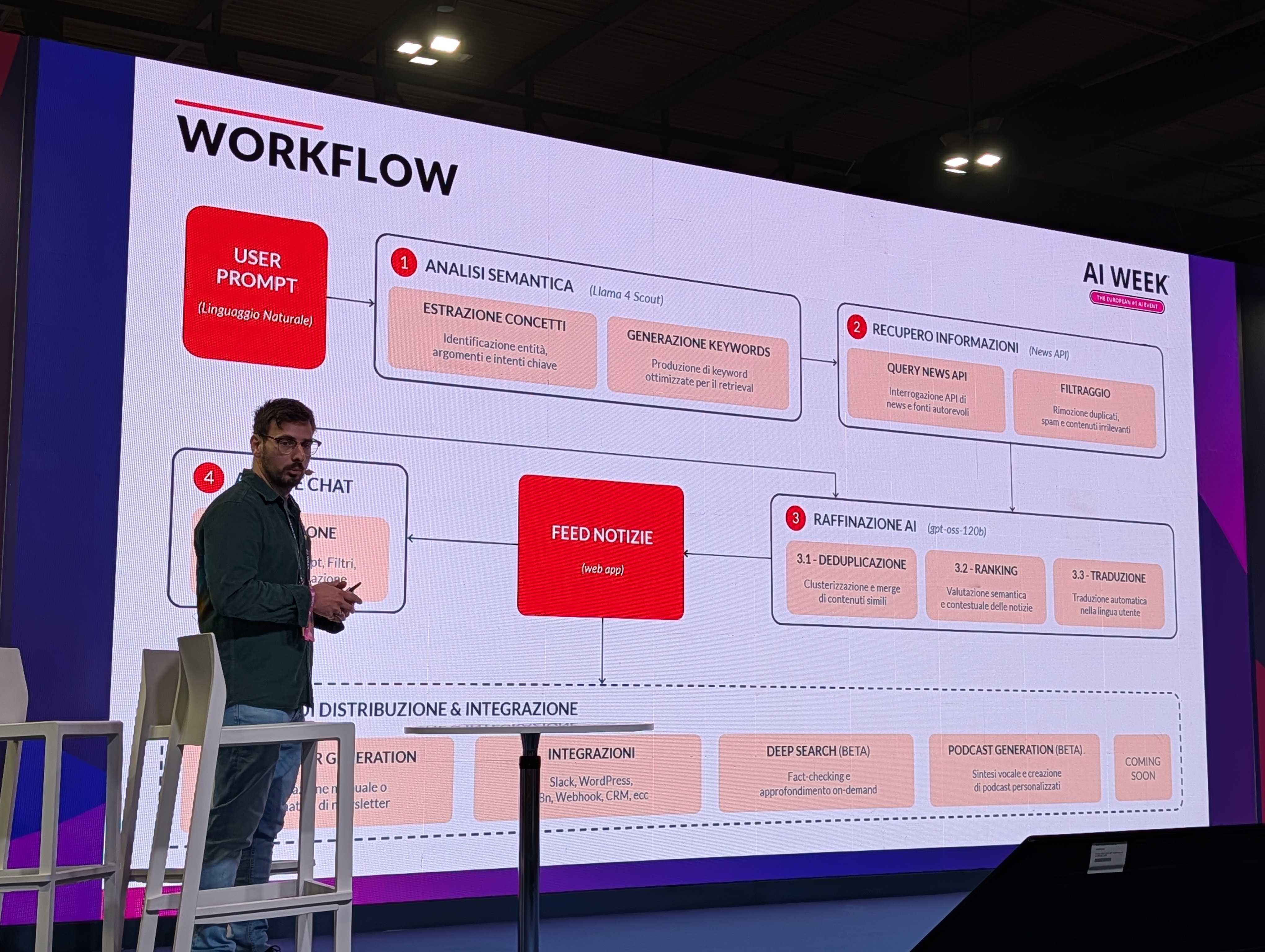
That may entail working with Google Drive where dedicated AI-ready folders are held, so human-ready workers can interact with the AI layer.
Additionally, audits are necessary. Audits must uncover goals, translate those goals into KPIs, and then connect questions to the client’s knowledge. The audit should provide crystal clear insights for the client so that the AI can use them as well. Ultimately, this should be treated as an ongoing process and a human-oriented task.
The latter set of steps, delivered by Datlas, helps your AI systems generate structured, integrable outputs and justified answers.
But in addition to these processes, there were some mistakes that marketers were compelled to avoid (explained by TIM Enterprise). They include:
These scenarios create conditions that can undermine the efficiency of AI workflows, making them an expensive waste.

AI Week was of course jam-packed with guest speakers representing a wide range of agencies, startups, and other companies in numerous verticals. However, a few made a lasting impression on us, namely, because of their AI culture shift insight.
A standout example for us was Arsenalia Group, an independent business consulting group based in Venice, Italy that specializes in AI and data automation. They collaborated with Despar Nord, the Italian retail division of the SPAR Austria Group, to deliver their AI insights.
These insights point to something that many companies are struggling with as they implement AI: empathy (which was a recurring theme) and precision. AI tools are enigmatic for so many agencies and organizations, because employees don’t know how to use them or see them as threats. But with the right strategy, support, and training, an AI culture becomes easier to adopt and embrace.
AI Week was yet another exciting event for us, as well as everyone in attendance. Just based on audience reactions, we could tell that many attendees will be going back home with new tricks to maximize their AI workflows and strategies.
We know that’s the case for us.
We’re already using AI tools to streamline our functions, such as those related to media buying. But we can’t wait to deploy some of AI Week strategies in other arenas as well. Our goal is to not only improve how we use AI tools and strategies but also, how we train our staff to coexist with these new digital collaborators.
We’re already looking forward to the 2027 edition of the conference and what’s in store for us then!
Are you interested in learning how AI can help supercharge your user acquisition efforts? Get in touch with us to learn how we use AI to help you maximize your marketing ROI!

.png)



%20(3).webp)